Assistant Professor of Molecular Biology
The New Jersey Institute of Technology (NJIT) invites applications for a 9-month, tenure-track faculty appointment in the Department of Biological Sciences. We seek an active researcher and educator who uses cell and molecular biology tools to study development, evolution, ecology, or neurobiology. Preferred candidates combine a strong background in cell and molecular biology with an interest in important questions in comparative and systems biology. Applicants will be expected to maintain an active, funded research program, supervise graduate and undergraduate students, teach undergraduate and graduate courses mainly in their area of expertise, and contribute to the overall activities and growth of the Department. Start date is 9/1/2023.
NJIT is a tier-one (R1) public research university located in Newark, NJ, with an emphasis on STEM fields. The successful candidate will join NJIT’s Federated Department of Biological Sciences, with faculty expertise in ecology and conservation, behavioral and morphological evolutionary adaptations, systems neurobiology, phylogenetics and cellular and computational neuroscience. Most faculty also use computational approaches in part thanks to our strong ties with members of the Department of Mathematical Sciences.
Diversity is a core value of NJIT, and we are committed to make diversity, equity and inclusion, part of everything we do. We celebrate the diversity of our university community and recognize the cultural and personal differences. We strive to cultivate an inclusive campus culture that promotes excellence among our faculty, staff, and students. Building a robust and diverse community is critical to NJIT’s continuing status as a premier institution of higher education and a leading polytechnic university.
Required application documents: 1) CV, 2) statement of research, 3) statement of teaching interests and philosophy, 4) contact information for three referees.
Deadline for applications before review of applications starts is Nov 30, 2022. Position starts Sept 1, 2023.
More information about the Department can be found at biology.njit.edu
Inquiries should be directed to Profs. Jorge Golowasch (golowasch@njit.edu) or Daphne Soares (soares@njit.edu)
Applicants should apply online at NJIT's Human Resources website: http://hr.njit.edu/careers/
The New Jersey Institute of Technology is an equal opportunity, affirmative action, equal access employer and encourages applications from women, minorities, and persons with disabilities.
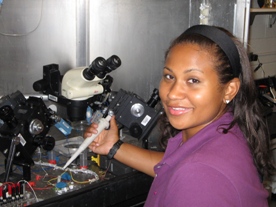
The Federated Department of Biological Sciences is committed to equal opportunity and respect for all students, staff and faculty, and does not tolerate discrimination or harassment in any form. We welcome a diverse set of voices, because it is right to do so, and because diversity of experience and thought leads to creativity of ideas and, ultimately, to better science. If you are from a group that is under-represented in science, or in biology specifically, we encourage you to consider a degree, and ultimately a career, in biology.
The Bachelor of Science (BS) Degree Program in Biology emphasizes a more quantitative approach to biology than the Bachelor of Arts (BA) degree program. The BS program will help students develop computer and mathematical skills needed for biological sciences in the 21st century. Students opting for BS must take advanced mathematics and computer science courses, including one upper division mathematical biology course. This curriculum is ideal for students who wish to work in industry, in government, or as a researcher or teacher.
Required coursework (NJIT Catalog)
Biology- Mathematical
How does the brain form memories? How do neurons coordinate activities? How do elephants decide where to travel next? Can we predict where a bird will nest? How do plants spread through a landscape? How will climate change affect plants?
As Biology is becomes a more quantitative science, the demand for mathematical biologists will continue to grow. Students with exceptional mathematics and science skills have the option of the Biology-Mathematics double major. Unlike many double majors that at least five years to complete, the Bio-Math double major has been designed to be completed in four years.
For more information, contact Prof. Bruce Bukiet or Karen Roach.
Biology- LTC
Law, Technology and Culture [LTC] is the pre-law program at NJIT. It is an interdisciplinary legal studies program that combines a traditional pre-law education with a focus on the intersection of science, technology, and law. The multidisciplinary approach of STS offers biology majors a unique opportunity to enhance their biology educational and expand their career options.
For more information, contact Carla Guerriero or Karen Roach.
Biology-Chemistry
The double major program in Biology-Chemistry combines two allied disciplines while preparing students for graduate work in either Biology or Chemistry, as well as careers pursuant to such fields as genetics, biotechnology, and molecular biology that embody both Biology and Chemistry. This program focuses on Biological Sciences (35 biology credits) and Chemistry (47 credits) with required courses in Biochemistry, Organic, Analytical and Physical Chemistry.
For more information contact the Chemistry/EVSC Advisor, Bhavani Balasubramanian or Biology Advisor, Karen Roach.
How can I learn more?
- Take a campus tour.
- Attend an undergraduate open house.
- Request information from our Admissions Office.
- Contact us at biology@njit.edu.
The Federated Department of Biological Sciences is committed to equal opportunity and respect for all students, staff and faculty, and does not tolerate discrimination or harassment in any form. We welcome a diverse set of voices, because it is right to do so, and because diversity of experience and thought leads to creativity of ideas and, ultimately, to better science. If you are from a group that is under-represented in science, or in biology specifically, we encourage you to consider a degree, and ultimately a career, in biology.
The Bachelor of Arts in Biology is distinct from the B.S. program in that it does not require advanced mathematics or computer science courses, even though both have the same total credit requirements. This program is ideal for a student planning on a health career or going to other graduate schools such as business or law. The B.A. program in Biology also exists in the form of three different Concentrations in addition to the general B.A. in Biology, which students can choose from in order to tailor their program to their specific interests: Neurobiology, Ecology and Evolution, and Cell and Molecular Biology.
Required coursework (NJIT Catalog)
Concentrations
Concentrations within the B.A. Program are designed to satisfy specific interests of our students, while maintaining the same core required courses and total number of credits:
- Neurobiology. This Concentration asks the student to select 3 courses specific in the field of Neurobiology, and gives the opportunity to take additional elective courses in the field.
Required coursework (NJIT Catalog)
- Ecology & Evolution: This Concentration asks the student to to focus their core courses selection within the field of Ecology and Evolution, and gives the opportunity to take additional elective courses in the field.
Required coursework (NJIT Catalog)
- Cell and Molecular Biology: Similar to the Ecology & Evolution Concentration, this one asks the student to to focus their core courses selection within the field of Cell and Molecular Biology, and gives the opportunity to take additional elective courses in the field.
The Federated Department of Biological Sciences is committed to equal opportunity and respect for all students, staff and faculty, and does not tolerate discrimination or harassment in any form. We welcome a diverse set of voices, because it is right to do so, and because diversity of experience and thought leads to creativity of ideas and, ultimately, to better science.
The Federated Department of Biological Sciences, located in the Central King Building, is housed within the College of Science and Liberal Arts (CSLA) at the New Jersey Institute of Technology (NJIT).
The Department of Biological Sciences at NJIT is Federated with our sister department at Rutgers University-Newark. That opens many wonderful opportunities for students on both sides of Federation, NJIT and Rutgers. We offer a number of joint degrees, including the BA, BS, MS and PhD in Biology. NJIT students can take biology classes at Rutgers, and vice versa, and also get involved in research with faculty from the other institution. Biology students thus obtain the best of both Universities.
At NJIT, biology was upgraded from a program to a department in 2007. In the past several years the number of biology students has increased 10-fold! Our faculty (currently 13 research faculty and four full-time instructors at NJIT, 18 research faculty and four instructors at Rutgers) carries out state-of-the-art research and instruction at both the undergraduate and graduate levels. All of our PhD students perform original research in our laboratories, as do many Masters and Undergraduate students. Our research programs are supported by federal, state and private funds, including grants from the National Science Foundation, the National Institutes of Health, the Binational Science Foundation, the National Park Service, the United States Fish and Wildlife Service, the Minority Academic Careers Program, etc.

Biology Professors perform research in such areas as regulation of neural network function, neuro-immunology, waves and diffusion of ions in the brain, respiratory physiology, population dynamics, ecosystems responses to global climate change, etc. For more infomation see this page.
Students who want to combine biology with other subjects will be happy to know that we collaborate with many other departments, such as Mathematics and Chemistry, Neuroscience at Rutgers, etc. In addition, we currently offer three double majors with Math, Chemistry and STS (Science, Technology and Society). Students are encouraged to broaden their interests by conducting inter-disciplinary research.
Please contact us for more information about the Department of Biological Sciences!
·
The Master of Science in Biology is designed to provide students with advanced knowledge of both plant and animal biology and microbiology. The program requires successful completion of a minimum of 30 credits of graduate-level courses. Students are expected to maintain a grade point average of 3.0 and are required to complete a minimum of one 3-credit course in four of the following five core areas:
- Cell Biology/Biochemistry
- Molecular Biology
- Computational Biology
- Ecology/Evolution
- Plant Biology ·
A partial list of course offerings in each of these areas can be found below. To complete the degree requirements, students must either complete a thesis based on laboratory or library research.
·

·
Admissions Requirements
Applicants are expected to have an accredited undergraduate degree in biology from an accredited institution. Candidates with other appropriate backgrounds will be considered. The following cognate undergraduate courses are required: general chemistry, organic chemistry, physics, and calculus. An undergraduate cumulative grade point average of at least 3.0 is expected.
In addition to the application form, three letters of recommendation, undergraduate and graduate transcripts, and Graduate Record Examination (GRE) General test scores are required for admission. Scores in the 50th percentile or better on each section of the general examination are required. The subject test in Biology is recommended. All applicants that received an undergraduate degree from a school outside of the United states are required to submit test scores from the Test of English as a Foreign Language (TOEFL).
Bridge Program: To ensure academic success in their graduate studies, students may be required to take additional undergraduate or graduate courses before beginning the program curricula. Bridge courses will be individually designed in consultation with their Graduate Advisor. Bridge courses must be completed before 9 credits of graduate degree courses are earned. Bridge courses are not counted as degree credits but do count in graduate GPA calculations if the course is numbered at the 500-level or higher.
·
Advisement
In the first year of study, students are advised on all academic matters by the MS Program Coordinator. During the first year of full-time study (or part-time equivalent), students complete sufficient course work to fulfill most core curricular requirements and work to develop a potential research project (library or laboratory) that will serve as the basis of the Capstone Thesis requirement. By the start of the second year, students must choose a faculty member to serve as Advisor during their laboratory or bibliographic thesis research project. When nearing completion of the minimum 30 credits required for the MS Degree, NJIT students must complete an application for graduation and submit it to the Graduate Program Director for signature.
·
Thesis Requirements
Students can fulfill the written thesis requirement either by conducting laboratory or library research. Important to successful completion of the thesis requirement is early identification of a thesis advisor such that proper planning is in place to complete research requirements in a timely and effective manner. The basic requirements and process for these two thesis pathways is presented below:
-
Laboratory or Field Research Thesis Option: Students selecting the experimentally-based research thesis option must successfully complete a minimum of 24 credits of course work and 6 credits in research with a graduate faculty member of the department. Under the guidance of this faculty member the student will perform original research. The thesis resulting from this research is expected to be presented as a hypothesis-driven scholarly work, with conclusions clearly derived from the experimental research and published background information. Students will write a scholarly thesis demonstrating the ability to write clearly and scientifically and based on experimental laboratory and/or field project research.
-
Bibliographic Thesis Option: Students selecting the bibliographic-based research thesis option must successfully complete a minimum of 27 credits of coursework and 3 credits of Independent Study with a graduate faculty member of the department. Under the guidance of this faculty member, the student will write a scholarly review of the literature on a scientific topic of interest. The thesis resulting from this research is expected to be a scholarly work, with conclusions clearly derived from the published information referred to by the author. This thesis should demonstrate the ability of the student to write scientifically, bringing together facts and interpretations relevant to that topic, in a clear, scholarly manner.
In both thesis options, upon completion of the written thesis, the student will defend the thesis publicly on the topic of their research, followed by a Q&A session with the examination committee. The thesis committee must be approved by the Graduate Program Director and will consist of the primary advisor and at least one other faculty reader who are full members of the Graduate Faculty. If a research plan requires the expertise of a non-graduate faculty advisor the committee will consist of three members – two from the graduate faculty and the advisor. Format and style of the final document must be in accordance with the guidelines set by and available at the Office of Graduate Studies. Please note that students who are unable to pass the thesis defense by the second try will be dismissed from the program.
·
Part-Time Students
Part-time students are expected to fulfill exactly the same requirements as full-time students.
·
Transfer Credits
·
-
Credits Already Taken: Up to nine (9) credits may be transferred for credit approval, provided that they were taken at an accredited college or university in the United States or Canada, were not used in fulfillment of a previous degree awarded, earned a final grade of 3.0 or above on a scale whose maximum is 4.0, were earned in graduate level courses for which full academic credit was awarded, were in units of at least three (3) credits, and were not earned more than seven years ago. Credits earned in quarter systems will be converted to equivalent semester credits.
-
Credits Not Yet Taken: Up to nine (9) credits may be transferred for credit approval, provided that they are taken at an accredited college or university in the United States or Canada, earn a final grade of 3.0 or above on a scale whose maximum is 4.0, are in graduate level courses for which full academic credit is awarded, and are in units of at least three (3) credits. Credits earned in quarter systems will be converted to equivalent semester credits.
·
NJIT Graduate Academic Policies and Procedures
·
-
A complete listing of graduate academic policies and procedures is available at: http://catalog.njit.edu/graduate/academic-policies-procedures/
-
Thesis and other academic information is available at the Office of Graduate Studies.
··
Contact Information
·
-
Website: http://biology.njit.edu
-
Email: biology@njit.edu
-
Address: http://biology.njit.edu/contact/
··
How can I learn more?
·
··
··
··
Undergraduate Research
Undergraduates are strongly encouraged to participate in research. In doing so, a student will be applying their classroom knowledge and strengthening their laboratory skills. For students planning on a career or graduate school, such laboratory experience can be invaluable. Because biology students have a broad science background, they can work with researchers from many disciplines. Our students have worked in the Chemistry, Biomedical Engineering and Mathematics departments at NJIT, and also in various departments at UMDNJ (now RBHS).
For advice on how to get involved, please see the Undergraduate Opportunities page. Below you will see a sampling of research projects carried out by our students.
Examples
Daniel Daudelin
Daniel is a senior at NJIT (class 2019) majoring in Biology. He has been doing research in Professor Jorge Golowasch’s neuroscience lab (Biology Dept) for several years. His work specifically focuses on the mechanisms used by neurons in the stomatogastric ganglion (STG) of crabs that enable them to homeostatically regulate their own electrical activity. This is important since all neurons receive a wide variety of inputs and perturbations throughout their life cycle, and in order for the organism to survive, these neurons must maintain their electrical activity restricted to within functional limits. His current project involves manipulating the expression levels of individual ion channels by injecting messenger ribonucleic acid (mRNA) that codes for these channel proteins directly into individual neurons. This is expected to up-regulate their expression. The changes in expression levels can be measured by measuring the amount of electrical current carried by the channels using electrophysiological methods. The effects this perturbation has on other channels is also measured. The hypothesis being tested is that cells can monitor the ion current levels being generated (or numbers of ion channels inserted in their membrane) and will up- or down-regulate other channels to maintain relative levels constant (homeostasis). Co-injection of mRNA that codes for a fluorescent protein, which can be easily visualized (see the figure), allows him to verify that an injection was successful. The expectation is that currents other than the one being manipulated will also see a change in their expression levels. Expression levels can in principle also be down-regulated using interference RNA (RNAi) by injecting short sequences of double-stranded RNA matching a specific (target) ion channel's sequence.
Raghav Patel
Raghav is a sophomore at NJIT (class 2020) majoring in Biomedical Engineering. His research with Dr. Horacio Rotstein (Biology) focuses on the issue of network resonance. Network resonance is the preferred frequency that excitatory and inhibitory networks respond at to oscillatory inputs. The goal of this project is to determine the network response patterns to oscillatory inputs and to establish the extent to which the network response qualitatively differs from the response of the individual neurons when they are isolated. For example, passive cells do not normally show resonance, but do so under certain circumstances. We use minimal network models including (i) individual cells that are either passive or non-oscillatory resonators, (ii) graded synapses with no dynamics that can be either both inhibitory, excitatory or hybrid, and (iii) sinusoidal inputs to one cell with frequencies in a wide range. We focus on various response measures including (i) the activity of each cell in the network, (ii) the overall (mean-field) network activity, and (iii) the activity ratio between the unperturbed and perturbed cells.

Federated Department of Biological Sciences
New Jersey Institute of Technology
Central King Building,
Room 337
University Heights
Newark, New Jersey 07102

Phone: 973-596-5612

Important: CKB COVID-19 Safety Rules & Guidelines Here
Areas of Research
Ecology
Interactions and dynamics of organisms and their environment.
Bunker, Daniel
Associate Professor
View ProfileDevan, Caroline
Senior University Lecturer
View ProfileGarnier, Simon
Professor
View ProfileRussell, Gareth
Associate Professor, Associate Chair and Undergraduate Director, Biological Sciences
View ProfileStanko, Maria
Senior University Lecturer
View ProfileTai, Xiaonan
Assistant Professor
View ProfileNelson, Michael
University Lecturer
View ProfileRutgers–Newark Faculty: Dr. Claus Holzapfel, Dr. Karina Shäfer
Organismal Biology and Evolution
The patterns and processes responsible for generating biodiversity.
Rutgers–Newark Faculty: Dr. Marcelo Gehara, Dr. Lily Khadempour, Dr. Angelo Soto-Centeno
Neuroscience
Working to understand the properties and behavior of neural networks.
Bucher, Dirk
Professor
View ProfileFortune, Eric
Associate Professor
View ProfileGolowasch, Jorge
Professor and Research Director, Biological Sciences
View ProfileNadim, Farzan
Professor and Chair, Biological Sciences
View ProfileRotstein, Horacio
Professor
View ProfileSeveri, Kristen
Assistant Professor
View ProfileSoares, Daphne
Associate Professor and MS Program Advisor, Biological Sciences
View ProfileHyland Bruno, Julia
Assistant Professor
View ProfileRutgers–Newark Faculty: Dr. Wilma Friedman, Dr. Haesun Kim, Dr. Tracy Tran
·
 *NEW COURSES IN BIOLOGY * REGISTER NOW!! *
·
Please follow the links below to obtain current course information offered by the Federated Department of Biological Sciences:
 |
 |
||
COURSE INFORMATION: |
|
||
COURSE SYLLABI: |
|
||
EXAM SCHEDULES: |
|||