Physician Assistant
The program is open to all students with a GPA of 3.0 or better, who can complete the expedited undergraduate curriculum in three years; which is similar to other accelerated curricula offered by the Department.
The curriculum includes the required and recommended courses for the PA program and has been approved by Rutgers School of Health Related Professions and NJIT.
Physical Therapy 
There are two options for students wishing to pursue becoming a physical therapist. Both options are joint programs with Rutgers School of Health Related Professions and lead to a Doctor of Physical Therapy (DPT).
The first is an accelerated six-year program which is administered by NJIT's Albert Dorman Honors College. This program is open to high school seniors applying to NJIT. Students in this program would have to follow an accelerated curriculum and all requirements specified by the Honors College.
The second option is a standard four-year undergraduate curriculum followed by the DPT program at Rutgers. Students in this program must maintain a 3.0 GPA or better and complete all necessary prerequisites for physical therapy. All requirements can be incorporated into either the BA or BS in Biology.
FALL 2017 SEMESTER: 
Click on the Course-Section Number to access the course syllabus:
| Course-Section Number | Course Name | Instructor |
| BIOL 200 | Concepts in Biology | Profs. Maria Stanko & Mary Konsolaki |
| BIOL 200H | Concepts in Biology Honors | Prof. John Yarotsky |
| BIOL 205-001 | Foundations of Biology: Ecology and Evolution Lecture | Profs. Caroline DeVan |
| BIOL 205-003 | Foundations of Biology: Ecology and Evolution Lecture | Profs. Caroline DeVan |
| BIOL 206 | Foundations of Biology: Ecology and Evolution Lecture Lab | Prof. John Yarotsky |
| BIOL 222 | Evolution | Prof. Daniel Bunker |
| BIOL 285 | Comparative Vertebrate Anatomy | Prof. Brooke Flammang- Lockye |
| BIOL 315 | Principles of Neurobiology | Prof. Jorge Golowasch |
| BIOL 320 | Discovering Biological Research | Profs. Simon Garnier & Phillip Barden |
| BIOL 338 | Ecology of the Dining Hall | Prof. Maria Stanko |
| BIOL 341 | Introduction to Neurophysiology | Prof. Dirk Bucher |
| BIOL 352 | Genetics | Adjunct Prof. Thomas Pietri |
| BIOL 368 | Ecology & Evolution of Disease | Prof. Gareth Russell |
| BIOL 383 | Neural Basis of Behavior | Prof. Gal Haspel |
| BIOL 383H | Neural Basis of Behavior Honors | Prof. Gal Haspel |
| BIOL 385H | Evolution of Animal Behavior Lab Honors | Adjunct Prof. Caroline DeVan |
| BIOL 400 | Biology in Science Fiction | Prof. John Yarotsky |
| BIOL 448H | Neuropathophysiology- Honors | Prof. Darshan Desai |
| BIOL 475H | Ecological Field Methods & Analysis Honors | Prof. Maria Stanko |
| BIOL 630 | Critical Thinking for the Life Sciences | Prof. Farzan Nadim |
| BIOL 640 | Cellular Neurophysiology | Prof. Dirk Bucher |
SUMMER 2017 SEMESTER: 
Click on the Course-Section Number to access the course syllabus:
| Course-Section Number | Course Name | Instructor |
| BIOL 200 | Concepts in Biology | Prof. Maria Stanko |
| BIOL 205 | Foundations of Biology: Ecology and Evolution Lecture | Prof. Andrew Mashintonio |
| BIOL 206 | Foundations of Biology: Ecology and Evolution Lab | Prof. Andrew Mashintonio |
| BIOL 340 | Mammalian Physiology | Prof. John Yarotsky |
| BIOL 375 | Conservation Biology | Prof. Caroline DeVan |
| BIOL 475H | Ecological Field Methods & Analysis Honors | Prof. Maria Stanko |
SPRING 2017 SEMESTER: 
Click on the Course-Section Number to access the course syllabus:
| Course-Section Number | Course Name | Instructor |
| BIOL 200 | Concepts in Biology | Profs. Maria Stanko & Mary Konsolaki |
| BIOL 205-002 | Foundations of Biology: Ecology and Evolution Lecture | Prof. Caroline DeVan |
| BIOL 205-004 | Foundations of Biology: Ecology and Evolution Lecture | Prof. Caroline DeVan |
| BIOL 205H | Foundations of Biology: Ecology and Evolution - Honors | Prof. Caroline DeVan |
| BIOL 206 | Foundations of Biology: Ecology and Evolution Lecture Lab | Prof. John Yarotsky |
| BIOL 315 | Principles of Neurobiology | Prof. Jorge Golowasch |
| BIOL 337 | Collective Intelligence | Prof. Simon Garnier |
| BIOL 340 | Mammalian Physiology | Prof. John Yarotsky |
| BIOL 344 | Physiological Mechanisms | Prof. Mary Konsolaki |
| BIOL 345 | Comparative Physiology | Prof. Daphne Soares |
| BIOL 347 | Lab Approaches in Neuroscience | Prof. Dirk Bucher |
| BIOL 350 | Immunology | Prof. John Yarotsky |
| BIOL 375 | Conservation Biology | Prof. Gareth Russell |
| BIOL 375H | Conservation Biology - Honors | Prof. Maria Stanko |
| BIOL 440H | Honors Cell Biology of Disease: Cells Gone Bad! | Prof. Darshan Desai |
| BIOL 447 | Systems Neurobiology | Prof. Farzan Nadim |
| BIOL 447H | Systems Neurobiology - Honors | Prof. Farzan Nadim |
| BIOL 462 | Comparative Biomechanics | Prof. Brooke Flammang |
| BIOL 475H | Ecological Field Methods & Analysis Honors | Prof. Maria Stanko |
| BIOL 495 | Seminar in Biology - Honors | Prof. Mary Konsolaki |
| Course-Section Number | Course Name | Instructor |
| BIOL 612 | Comparative Animal Physiology | Prof. Daphne Soares |
| BIOL 638 | Computational Ecology | Prof. Gareth Russell |
| BIOL 641 | Systems Neuroscience | Prof. Farzan Nadim |
| BIOL 645 | Biological Imaging Techniques | Prof. Gal Haspel |
FALL 2016 SEMESTER:
Click on the Course-Section Number to access the course syllabus:
| Course-Section Number | Course Name | Instructor |
| BIOL 200 | Concepts in Biology | Profs. Maria Stanko & Mary Konsolaki |
| BIOL 200H | Concepts in Biology Honors | Prof. Eric Fortune |
| BIOL 205-001 | Foundations of Biology: Ecology and Evolution Lecture | Profs. Caroline DeVan & Daphne Soares |
| BIOL 205-003 | Foundations of Biology: Ecology and Evolution Lecture | Profs. Caroline DeVan & Daphne Soares |
| BIOL 206 | Foundations of Biology: Ecology and Evolution Lecture Lab | Prof. John Yarotsky |
| BIOL 222 | Evolution | Prof. Daniel Bunker |
| BIOL 285 | Comparative Vertebrate Anatomy | Prof. Brooke Flammang- Lockye |
| BIOL 315 | Principles of Neurobiology | Prof. Jorge Golowasch |
| BIOL 320 | Discovering Biological Research | Profs. Simon Garnier & Mary Konsolaki |
| BIOL 338 | Ecology of the Dining Hall | Prof. Maria Stanko |
| BIOL 341 | Introduction to Neurophysiology | Prof. Dirk Bucher |
| BIOL 368 | Ecology & Evolution of Disease | Prof. Gareth Russell |
| BIOL 375 | Conservation Biology | Prof. Gareth Russell |
| BIOL 383 | Neural Basis of Behavior | Prof. Gal Haspel |
| BIOL 383H | Neural Basis of Behavior Honors | Prof. Gal Haspel |
| BIOL 385H | Evolution of Animal Behavior Lab Honors | Adjunct Prof. Lisa O'Bryan |
| BIOL 400 | Biology in Science Fiction | Prof. John Yarotsky |
| BIOL 448H | Neuropathophysiology- Honors | Prof. Darshan Desai |
| BIOL 475H | Ecological Field Methods & Analysis Honors | Prof. Maria Stanko |
| Course-Section Number | Course Name | Instructor |
| BIOL 630 | Critical Thinking for the Life Sciences | Prof. Farzan Nadim |
| BIOL 640 | Cellular Neurophysiology | Prof. Dirk Bucher |
SUMMER 2016 SEMESTER:
Click on the Course-Section Number to access the course syllabus:
| Course-Section Number | Course Name | Instructor |
| BIOL 200 | Concepts in Biology | Prof. Maria Stanko |
| BIOL 205 | Foundations of Biology: Ecology and Evolution Lecture | Prof. Andrew Mashintonio |
| BIOL 206 | Foundations of Biology: Ecology and Evolution Lab | Prof. Andrew Mashintonio |
| BIOL 340 | Mammalian Physiology | Prof. John Yarotsky |
| BIOL 375 | Conservation Biology | Prof. Andrew Mashintonio |
| BIOL 475H | Ecological Field Methods & Analysis Honors | Prof. Maria Stanko |
SYLLABUS ARCHIVE: 
SPRING 2016 SEMESTER
Click on the Course-Section Number to access the course syllabus:
| Course-Section Number | Course Name | Instructor |
| BIOL 200 | Concepts in Biology | Profs. Caroline Devan & Andrew Mashintonio |
| Foundations of Biology: Ecology and Evolution Lecture | Prof. Ellen Wisner | |
| BIOL 205H | Foundations of Biology: Ecology and Evolution Lecture Honors | Prof. Ellen Wisner |
| BIOL 206 | Foundations of Biology: Ecology and Evolution Lab | Prof. Caroline Devan |
| BIOL 315 | Principles of Neurobiology | Prof. Jorge Golowasch |
| BIOL 337 | Collective Intelligence | Prof. Simon Garnier |
| BIOL 340 | Mammalian Physiology | Prof. John Yarotsky |
| BIOL 344 | Physiological Mechanisms | Prof. John Yarotsky |
| BIOL 350 | Immunology | Prof. John Yarotsky |
| BIOL 375 | Conservation Biology | Prof. Andrew Mashintonio |
| BIOL 375H | Conservation Biology Honors | Prof. Maria Stanko |
| BIOL 440H | Honors Cell Biology of Disease: Cells Gone Bad! | Prof. Darshan Desai |
| BIOL 447 | Systems Neurobiology | Prof. Farzan Nadim |
| BIOL 447H | Systems Neurobiology Honors | Prof. Farzan Nadim |
| BIOL 475H | Ecological Field Methods and Analysis Honors | Prof. Maria Stanko |
| BIOL 495-002 | Honors Seminar in Biology | Profs. Maria Stanko & Eric Fortune |
| Course-Section Number | Course Name | Instructor |
| BIOL 638 | Computational Ecology | Prof. Gareth Russell |
| BIOL 641 | Systems Neuroscience | Prof. Farzan Nadim |
| BIOL 698-002 | Selected Topics in Biology: Bio-Inspired Robotics | Prof. Brooke Flammang |
| BIOL 698-004 | Selected Topics in Biology: Advanced Imaging Techniques | Prof. Gal Haspel |
FALL 2015 SEMESTER: 
Click on the Course-Section Number to access the course syllabus:
| Course-Section Number | Course Name | Instructor |
| BIOL 200 | Concepts in Biology | Profs. Maria Stanko & Caroline Devan |
| BIOL 200H | Concepts in Biology Honors | Profs. Eric Fortune & Brooke Flammang |
| BIOL 205-001 | Foundations of Biology: Ecology and Evolution Lecture | Prof. Ellen Wisner |
| BIOL 206 | Foundations of Biology: Ecology and Evolution Lecture Lab | Prof. Andrew Mashintonio |
| BIOL 222 | Evolution | Prof. Daniel Bunker |
| BIOL 315 | Principles of Neurobiology | Prof. Jorge Golowasch |
| BIOL 320 | Discovering Biological Research | Profs. Simon Garnier & Daphne Soares |
| BIOL 338 | Ecology of the Dining Hall | Prof. Maria Stanko |
| BIOL 341 | Introduction to Neurophysiology | Prof. Dirk Bucher |
| BIOL 375 | Conservation Biology | Prof. Gareth Russell |
| BIOL 383 | Neural Basis of Behavior | Prof. Gal Haspel |
| BIOL 383H | Neural Basis of Behavior Honors | Prof. Gal Haspel |
| BIOL 385H | Evolution of Animal Behavior Lab Honors | Prof. Ellen Wisner |
| BIOL 400 | Biology in Science Fiction | Prof. John Yarotsky |
| BIOL 448H | Neuropathophysiology: Nervous System Gone Bad! | Prof. Darshan Desai |
| BIOL 475H | Ecological Field Methods & Analysis Honors | Prof. Maria Stanko |
| Course-Section Number | Course Name | Instructor |
| BIOL 630 | Critical Thinking for the Life Sciences | Prof. Farzan Nadim |
| BIOL 698 | Selected Topics in Biology: Neurobiology | Prof. Dirk Bucher |
SUMMER 2015 SEMESTER:
Click on the Course-Section Number to access the course syllabus:
| Course-Section Number | Course Name | Instructor |
| BIOL 200 | Concepts in Biology | Prof. Maria Stanko |
| BIOL 205 | Foundations of Biology: Ecology and Evolution Lecture | Prof. Ellen Wisner |
| BIOL 206-021 | Foundations of Biology: Ecology and Evolution Lab | Prof. Ellen Wisner |
| BIOL 475H | Ecological Field Methods & Analysis Honors | Prof. Maria Stanko |
SPRING 2015 SEMESTER:
Click on the Course-Section Number to access the course syllabus:
| Course-Section Number | Course Name | Instructor |
| BIOL 200 | Concepts in Biology | Profs. Maria Stanko & Eric Fortune |
| BIOL 205-002 | Foundations of Biology: Ecology and Evolution Lecture | Prof. Ellen Wisner |
| Foundations of Biology: Ecology and Evolution Lecture | Prof. Ellen Wisner | |
| BIOL 205-H02 | Foundations of Biology: Ecology and Evolution Lecture Honors | Prof. Ellen Wisner |
| BIOL 206 | Foundations of Biology: Ecology and Evolution Lab | Prof. John Yarotsky |
| BIOL 315-002 | Principles of Neurobiology | Prof. Jorge Golowasch |
| BIOL 337-002 | Collective Intelligence |
Prof. Simon Garnier |
| BIOL 340 | Mammalian Physiology | Prof. Christopher Trimby |
| BIOL 344-002 | Physiological Mechanisms | Prof. Christopher Trimby |
| BIOL 350-002 | Immunology | Prof. John Yarotsky |
| BIOL 375-002 | Conservation Biology | Prof. Maria Stanko |
| BIOL 375-H02 | Conservation Biology Honors | Prof. Maria Stanko |
| BIOL 440-H02 | Honors Cell Biology of Disease: Cells gone Bad! | Prof. Darshan Desai |
| BIOL 445-002 | Endocrinology | Prof. John Yarotsky |
| BIOL 447-002 | Systems Neurobiology | Prof. Farzan Nadim |
| BIOL 447-H02 | Systems Neurobiology Honors | Prof. Farzan Nadim |
| BIOL 475-H02 | Ecological Field Methods and Analysis | Prof. Maria Stanko |
| BIOL 495-H02 | Honors Seminar in Biology | Prof. Gareth Russell |
| Course-Section Number | Course Name | Instructor |
| BIOL 612-002 | Comparative Animal Physiology | Prof. Daphne Soares |
| BIOL 641-002 | Systems Neuroscience | Prof. Farzan Nadim |
| BIOL 698-002 | Selected Topics in Biology: Bio-Inspired Robotics | Prof. Brooke Flammang |
| BIOL 698-004 | Selected Topics in Biology: Physiology and Imaging | Profs. Dirk Bucher & Gal Haspel |
FALL 2014 SEMESTER:
Click on the Course-Section Number to access the course syllabus:
| Course-Section Number | Course Name | Instructor |
| BIOL 200 | Concepts in Biology | Profs. Maria Stanko & Christopher Trimby |
| BIOL 200H | Concepts in Biology Honors | Prof. Eric Fortune |
| BIOL 205-001 | Foundations of Biology: Ecology and Evolution Lecture | Prof. Ellen Wisner |
| BIOL 205-003 | Foundations of Biology: Ecology and Evolution Lecture | Prof. Ellen Wisner |
| BIOL 206 | Foundations of Biology: Ecology and Evolution Lab | Prof. John Yarotsky |
| BIOL 206-H01 | Foundations of Biology: Ecology and Evolution Lab Honors | Prof. John Yarotsky |
| BIOL 222-001 | Evolution | Prof. Daniel Bunker |
| BIOL 315-001 | Principles of Neurobiology | Prof. Jorge Golowasch |
| BIOL 320 | Discovering Biological Research | Profs. Brooke Flammang & Simon Garnier |
| BIOL 338-001 | Ecology of the Dining Hall | Prof. Maria Stanko |
| BIOL 341-001 | Introduction to Neurophysiology | Prof. Dirk Bucher |
| BIOL 368-H01 | The Ecology and Evolution of Disease Honors | Prof. Gareth Russell |
| BIOL 383-001 | Neural Basis of Behavior | Prof. Brooke Flammang |
| BIOL 383-H01 | Neural Basis of Behavior Honors | Prof. Gal Haspel |
| BIOL 385-H01 | Evolution of Animal Behavior Lab Honors | Prof. Ellen Wisner |
| BIOL 448-H01 | Neuropathophysiology | Prof. Darshan Desai |
| BIOL 475-H01 | Ecological Field Methods & Analysis Honors | Prof. Maria Stanko |
| Course-Section Number | Course Name | Instructor |
| BIOL 628-001 | Cell Biology of Disease | Prof. Christopher Trimby |
| BIOL 630 | Critical Thinking for the Life Sciences | Profs. Farzan Nadim & Daniel Bunker |
| BIOL 698-101 | ST: Darwin's Voyage of the Beagle | Prof. Daphne Soares |
SPRING 2014 SEMESTER:
Click on the Course-Section Number to access the course syllabus:
| Course-Section Number |
Our program in biology is designed to provide the scholarly basis for a lifetime of learning and discovery in biology. Our students use their knowledge in a wide range of careers, including:
- Environmental Protection
- Public Health Inspector or Analyst
- Physical or Occupational Therapist
- Biomedical Scientist
- Occupational Health and Safety
- Pharmacist
- Regulatory Compliance
- Nutritionist
- Epidemiologist
- Criminologist/Forensic scientist
- Physician Assistant
- Professor
- Nurse
- Research Scientist
Our department is a remarkable group of dedicated researcher scientists and educators. We share a passion for discovery and for teaching in the biological sciences.
The success of our students is at the core of our mission. NJIT biology professors work with our talented and motivated students to reveal fundamental processes that govern the living world. These insights are born from interactions that start in the classroom, but extend to the laboratory where faculty and students work together to solve persistent questions in biology. These experiences provide the basis for the long-term success of our students, as they continue their studies in medical school, graduate school, and in their professional endeavors.
Our family of scientists study a broad range of fascinating questions in biology, from the function of individual molecules in brain cells, the mechanics of swimming, to the collective behavior of ants as they navigate complex habitats. Our close colleagues at Rutgers Newark — who are across the street and open their labs to NJIT students — extend the range of research to include questions related to human health, such as epigenetic mechanisms of cancer and how changes in the brain can lead to Alzheimer’s and Parkinson’s disease.
If you would like to know more about us, our program, and what to expect when you are here, please take a look at the resources we’ve posted on the Biology website and the websites of our faculty. And please don’t hesitate to get in touch if you have any questions!
This page is a work in progress, It is intended to hold information about student organizations and clubs, as well as advice on topics such as how to get involved in research. Some content will be student-created.
Students in other majors can choose to Minor in Biology in order to broaden their exposure to the sciences. The minor must be declared by the semester preceding graduation. Students should complete an Application to Change Major/Minor/Concentration form.
-
Required Courses
Currently the Minor in Biology requires 12 credits of core courses and 10 credits of elected concept cluster courses in Biology. Therefore, Biology Minors are required to complete a total of 22 credits minimum to fulfill the minor requirement. Declared minors should reference the proper time frame and follow the required associated courses as specified below.
I. Required Core Courses [12 credits]
-
BIOL 200 - Concepts in Biology [4]
-
BIOL 201 - Foundations of Cell and Molecular Biology Lecture [3]
-
BIOL 202 - Foundations of Cell and Molecular Biology Laboratory [1]
-
BIOL 205 - Foundations of Ecology and Evolution Lecture [3]
-
BIOL 206 - Foundations of Ecology and Evolution Laboratory [1]
·
II. Concept Cluster Courses [10 credits]. Minors must complete one course from each of the following three concept cluster categories:
·
A. » Ecological and Evolutionary Framework [3 credits]
-
BIOL 222 or R120:222- Evolution [3]
-
BIOL 280 or R120:282
-
BIOL 382 - Animal Behavior [3]
-
R120:370 - Plant Ecology [3]
·
B. » The Functional Organism [4 credits]
-
R120:211 - Plant Kingdom [4]
-
R120:230 - Biology of Seed Plants [4]
-
R120:335 - Microbiology [4]
-
R120:330 - Plant Physiology [4]
-
BIOL 340 or R120:340 - Mammalian Physiology [4]
·
C. » Molecular and Cellular Mechanisms [3 credits]
-
BIOL 352 or R120:352 - Genetics [3]
-
R120:355 - Cell Biology [3]
-
R120:356 - Molecular Biology [3]
-
CHEM 473 or R120:360 - Biochemistry [3]
·
The Department of Biological Sciences has introduced the following new courses in recent semesters. Please note that not all courses are offered each semester: please check the NJIT course schedule to see which courses are coming up. If you are interested in a course and would like to know when it will next be offered, please see your academic advisor.
BIOL 250: Biology of Neotropical Habitats: Ecuador and Galápagos Islands
|
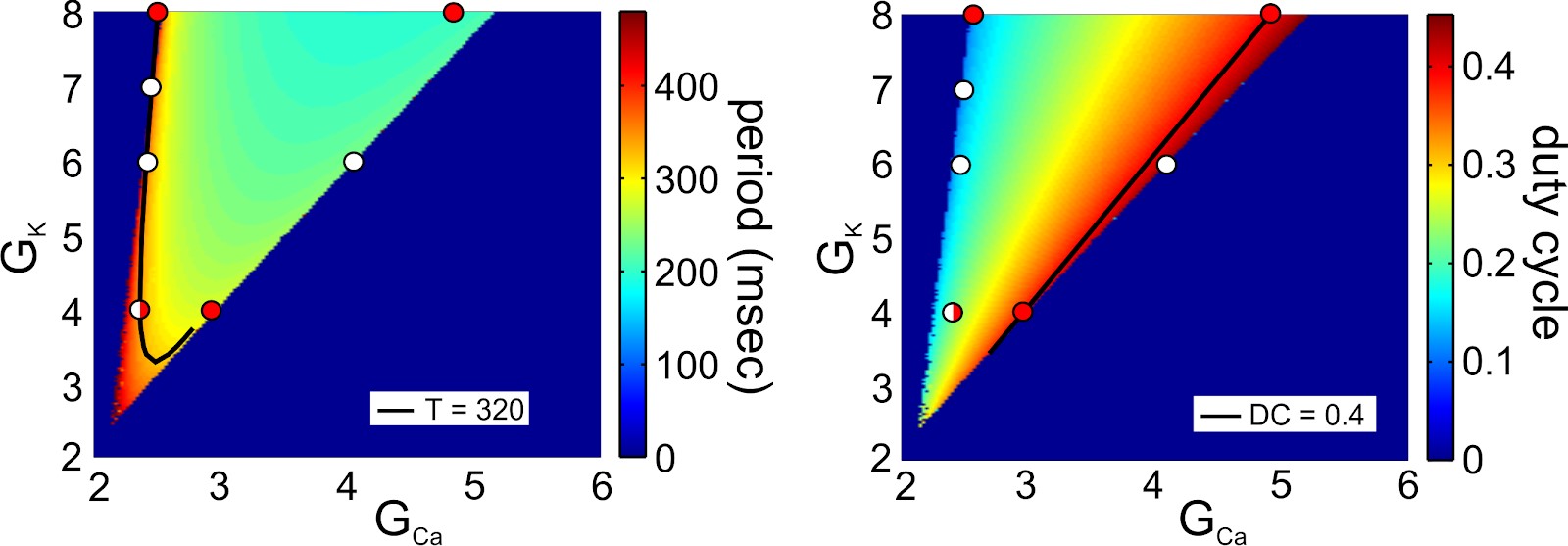
BIOL 432: Introduction to Computational Neuroscience
|
BIOL 436: Advanced Neuroscience ModelingPrerequisites: BIOL 432 or MATH 430 or permission by instructor. Modeling and computational analysis of biological neuronal networks. The course consists of lectures, and scientific paper presentations aimed at acquiring a clear understanding of the biological issues in systems neuroscience. Students will work on developing an independent modeling/computational project during the duration of the semester around which biological topics will be discussed. Effective From: Spring 2019 |
BIOL 470: Dynamic Principles in Systems BiologyPrerequisites: MATH 222 , and BNFO 135 or CS100 or CS115 grade C or better, or permission by instructor. Introduction to the dynamic and computational modeling of biological systems, including chemical, biochemical, metabolic and genetic networks. The course includes the description of basic principles and case studies and provides the necessary mathematical and computational tools to understand the mechanisms underlying the dynamics of this type of networks. The necessary knowledge on the biology will be introduced during the course. Effective From: Fall 2019 |
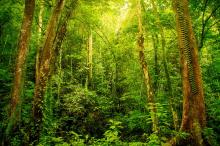 Prerequisite: Students must interview with the instructor and have his/her permission. This course is an introduction to tropical biology and evolution held in Ecuador's Highlands, Rain Forest, and in the Galápagos Islands. The course will concentrate on using a hands-on approach to study the flora and fauna of these unique habitats. The course also addresses the history, politics, and culture of Ecuador, with emphasis on how these issues influence the management and sustainability of Ecuadorian natural resources. Effective: Spring 2019
From the activity of neurons in our brains that determine everything we sense and do, to the ecosystems that provide the resources necessary for our survival, the biological world determines the nature of our existence. The study of biology is the key to understanding ourselves and the world in which we live, and has the potential to improve the lives of people everywhere.
Faculty and student biologists at NJIT work together to advance our understanding of the living world. For many of our students, this work forms the foundation for their careers in medicine. Their hard-won knowledge of biology prepares them for the challenges of improving people’s lives through the delivery of health care, through improvements in treatment strategies, and through advances in our basic understanding of human biology and disease. Many other students use their skills to make contributions in critical fields such as conservation, sustainability, urban planning, education, and through basic research.
The Department of Biological Sciences is committed the advancement of our students and scientific knowledge. We are proud that our diverse faculty, staff, and students come from different backgrounds, representing a wide range of cultural and social perspectives and experiences, which enhances everything we do.
Third Annual Research Showcase, April 11, 2007
Swetha Basani
“The Effect of Mercuric Ion APTT on PT Clotting Tests”
Advisor Professor Charles Spillert, New Jersey Medical School
Mercuric ion (Hg2+) has been found to increase coagulant activity in whole blood. We conducted an in vitro study to determine whether mercuric chloride (HgCl2) has an effect on blood coagulation when added to whole blood solutions containing either PT or APTT reagent. We used 10 µl of 10% PT reagent and 10 µl of 10% APTT reagent and added them to separate solutions of 990 µl of human citrated whole blood (CWB). Mercuric chloride was added to each reagent sample and compared to the samples containing only reagent. The incubation period was 5 minutes at 37ºC. The blood clotting time was measured in seconds using a Sonoclot Coagulation Analyzer. PT and HgCl2 resulted in no change in clotting time when compared to that of just PT. APTT, in combination with HgCl2, resulted in a significant reduction in clotting time when compared to that of just APTT (p<0.01). The data in this study suggests that HgCl2 and APTT concurrently stimulate coagulation.
Krystian F. Jarosz
“Assessing Genetic Susceptibility to Early Onset Periodontitis”
Advisor Professor S. Diehl, New Jersey Dental School
Aggressive periodontitis is a rare destructive disease of the periodontal tissue that occurs in young individuals. Recently there has been an increased amassing of evidence for a genetic susceptibility to this classification of periodontal disease. This study aims to explore such a hypothesis of genetically programmed disease-genes via genotyping with SNP genetic markers. The study incorporates reaction plate preparation, assay operation, reading of the genotype, and lastly statistical analysis of obtained findings. Studies such as this are performed with the broad intention of future genetic therapy applications such as the preparation of personalized drugs that may ameliorate disease symptoms, or prevent disease altogether.
Jasneet Kaur and Tao Lin ( Math)
“Impact of Constitutively Active RhoA and Change in Cell Shape on Mitotic Spindle Orientation”
Advisors Professor Amitabha Bose and Professor Edward Bonder
The orientation of the mitotic spindle in a cell determines the cleavage plane for cytokinesis. Expression of constitutively active RhoA, a member of Rho GTPase family that is involved in signaling the rearrangement of actin cytoskeleton, has been observed to lead to a rounded cell shape as well as the misorientation of the mitotic spindle. In this report, we have examined the relationship between the change in cell shape caused by RhoA and the misorientation of the mitotic spindle. Normal IAR-2 rat liver epithelial cells, RhoA activated IAR-2 cells, and RhoA activated IAR-2 cells treated with several different concentrations of Y-27632, a highly potent, cell-permeable, selective inhibitor of Rho-associated protein kinase, were observed by confocal microscopy. This inhibitory action of Y-27632 relaxes actin-myosin contraction and allows the cell shape of the RhoA activated cells to return to normal. As a result, the relationship between cell shape and spindle orientation can be studied by analyzing the shapes and spindle angles of the different cells. From the data, it was concluded that the change in cell shape caused by the effect of constitutively active RhoA did not directly lead to a misoriented spindle. We propose that the reduction in amount of cortical flow as a result of over expression of RhoA has a more significant role in regulating the mitotic spindle orientation. Through mathematical modeling we show that the effect of cell shape is minimal compared to the effect of cortical flow in determining the angle of the mitotic spindle.
Olga Khorkova, PhD Student in Biology
“Long-Term Effects of Neuromodulatory Input on Ionic Current Interactions”
Advisor Jorge Golowasch
Reliability of respiration, heartbeat and digestion depends on the stability of output (bursting activity) of the central pattern generators (CPGs) controlling these functions. The bursting activity in turn depends on the characteristics of the ionic currents expressed by CPG neurons. Here we show that CPG neurons with different functions (e.g. pacemaker vs follower neurons) have distinct regulation of their currents levels and of their correlations. We further demonstrate that neurons with different functions respond differently during adaptation to changes in environmental inputs, such as the loss of neuromodulator supply after decentralization of crab stomatogastric ganglion (STG). Such differences could be essential for the simultaneous maintenance of stable output of single neurons and CPG networks under constantly changing environmental conditions.
Samin Nawaz
“Structural Insights into Hydrolytic Mechanism of Antibiofilm Agent Dispersin B”
Advisor Dr. N. Ramasubbu, New Jersey Dental School
Bacteria in a biofilm are enmeshed in a self-synthesized extracellular polysaccharide matrix (PGA) which is a linear polymer of N-acetylglucosamine residues in β(1,6)-linkage. Dispersin B (DspB), a soluble glycoside hydrolase produced by Actinobacillus actinomycetemcomitans (Aa) degrades PGA. DspB, is an (β/α) TIM-barrel protein and belongs to family 20 glycosyl hydrolases in which a conserved amino acid pair, aspartate-glutamate, is present (Asp183-Glu184, DspB numbering). In addition, the active site of DspB contains another acidic residue Glu332 at about 5Å away from Glu184. Objective: To understand the role of each of these acidic residues in the hydrolytic mechanism.
Methods: Using site-directed mutagenesis, biological and biochemical characterization, we investigated the role of Asp183, Glu184 and Glu332. Results: We found that Glu184 and Glu332 residues are essential for DspB activity. Mutation of each of these causes a significant reduction in the enzymatic activity. The variant Glu184Gln requires a 10-fold increase in enzyme concentration (>1000 nM) for measurable activity in kinetic as well as biofilm assay whereas Glu332Gln is inactive even at 1000 nM. In contrast, both DspB and Asp183Ala exhibited similar kinetics at 100 nM concentration; however, Asp183Ala showed a 12-fold loss in activity compared to DspB. Similar results were obtained in a 96-well biofilm detachment assay as well.
Conclusion: The loss of activity in the Glu184 and Glu332 variants suggests that DspB might hydrolyze PGA through a mechanism similar to the substrate-assisted mechanism proposed earlier. Based on our results, it appears that Asp183, Glu184 and Glu332 play a significant role in the hydrolysis of PGA.
Roshan Prabhu
“Temperature Dependency of Circadian Clocks in Drosophila”
Advisor Professor Issac Edery, Rutgers-New Brunswick
The circadian clock, an internal biological clock, allows, among other things, an organism to adjust its daily activity patterns by sensing changes in environmental queues such as light/dark (LD) cycles and temperature. Splicing of the Drosophila melanogaster period (per) intron 8 (dmpi8) in the 3’UTR has been associated with temperature sensitivity of circadian clocks in Drosophila. High splicing efficiency is linked with early evening activity peak and low splicing efficiency with later mainly nocturnal evening activity peaks in D. melanogaster (Canton-S; a strain originating from N. America). Cold temperatures are associated with high splicing efficiency and warm temperatures with low splicing efficiency. This makes biological sense by providing a mechanism whereby flies avoid the hot midday hours during warm days. The SR proteins sc35, srp54, nop5, xl6, rbp1, sf2 may play a role in splicing regulation, however, silencing expression of a single protein at a time showed no affect. Silencing multiple related proteins at a time may be the key to determining the role of these SR proteins in splicing regulation of dmpi8.